
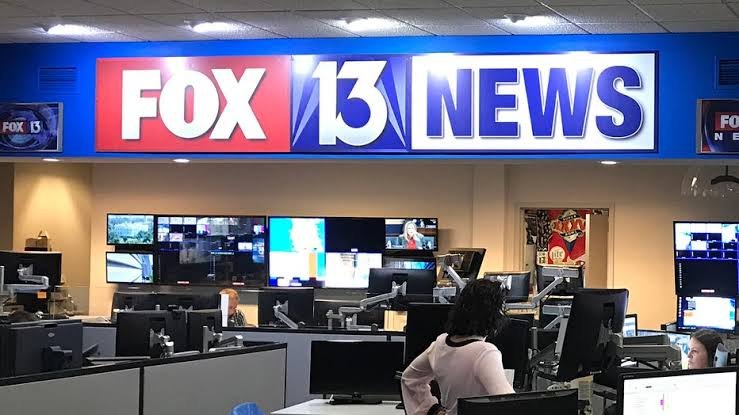
If you watch Fox 13 Seattle regularly, you have probably noticed some familiar faces are gone. Social media threads and Reddit discussions are asking the same thing: what is going on over there? The question is fair. When several anchors leave within a short stretch of time, it does feel like something is off.
This article breaks down who has actually left, what the departures likely mean, and how much of the “everyone is leaving” story reflects real trouble versus the way local TV news has always worked.
Who Has Recently Left Fox 13 Seattle
Let’s start with names, because that is what most people are searching for.
Brian Flores departed Fox 13 and made it clear where he was headed. During his on-air farewell, he said directly: “I’m going to the CBS station in Denver.” That is a voluntary move to a new market — a career step, not an exit under pressure.
Travis Mayfield left the Fox 13 Morning News as well. The station aired a farewell segment for him, which is standard practice when a departure is known in advance and handled professionally.
At least one morning anchor posted an Instagram update describing her final day anchoring Good Day Seattle. Her caption read: “Today was my last time anchoring Good Day Seattle & Friday will be my last time on air for FOX 13. Two years flew by…” The tone was warm, not bitter — though it still landed as a noticeable goodbye for regular viewers.
Reddit discussions in the r/Seattle community also reference morning anchors Liz and Chynna as departures that felt sudden. Those threads are useful for understanding how viewers are reacting, but they do not explain the reasons behind any individual departure. They mostly show that regular viewers noticed, and were confused about what to watch next.
The key takeaway from these confirmed departures: some were clearly voluntary moves to other opportunities, and the station handled them with public farewells. None of the available public information points to anything more dramatic than that.
The Business Reasons Behind Local TV Anchor Turnover
Once you understand how local TV news actually works as a business, these departures start to look much more routine.
Career progression is the most common driver
Moving from one market to a larger one — or from a local affiliate to a different network-affiliated station — is a standard career move in broadcast journalism. Brian Flores going from Seattle to Denver’s CBS station is a textbook example of this. Anchors and reporters often spend two to four years at a station building experience, then move on to a bigger opportunity.
Contracts run on cycles
Local TV talent typically signs contracts that run two to three years. When those contracts come up for renewal, both sides have to agree on new terms — pay, role, schedule, and responsibilities. That does not always happen. When it does not, one or both parties move on. This is not a crisis; it is how the business is structured.
Corporate ownership affects budgets
Fox 13 Seattle is owned by Fox Television Stations, a corporate parent with priorities that extend well beyond a single market. Budget decisions made at the corporate level can affect how many high-salary anchor contracts a local station maintains. Some stations shift toward using multimedia journalists who handle multiple roles, which changes the math on big anchor contracts.
Morning shifts are hard to sustain
Morning news positions involve brutal schedules. Anchors are often arriving at work between 2 and 4 a.m. to prepare for shows that start at 4 or 5 a.m. After a few years of that, lifestyle factors — family, health, or simply wanting a different pace — push some experienced anchors toward other roles or markets. This is not unique to Fox 13.
None of these reasons require a scandal or internal breakdown to be true. They are the normal mechanics of the local news business, and they play out at stations across the country every year.
Fox 13 Still Has a Team — Here Is What the Roster Shows
The phrase “everyone is leaving” makes for a compelling social media post, but it does not hold up when you look at the station’s actual roster.
Fox 13’s current “Meet the Team” and “Personalities” pages list a sizable group of on-air anchors, reporters, meteorologists, and contributors. The station has not gone dark. Shows are still airing. New faces have joined alongside longtime staff.
Franque Thompson is a useful concrete example here. She joined Fox 13 as a reporter in August 2019 and was promoted to weekend anchor in April 2024. That is internal advancement — someone growing within the organization, not leaving it. Promotions like this do not generate the same social media buzz as departures, but they are happening at the same time.
It is also worth noting that some staffing news around Fox 13 involves people arriving, not just exiting. Personalities have announced joining the station via social media, though these posts attract far less attention than farewell videos. Goodbyes travel further than hellos on the internet.
The perception of mass departure can be amplified when several exits cluster within a few months, even if overall headcount stays relatively stable. A few goodbye segments in a short window will generate more noise than a gradual, quiet rebuild of the lineup happening at the same time.
Why Viewers Feel It More Intensely With Morning Show Hosts
There is a real emotional dimension to this, and it is worth taking seriously.
Morning news anchors occupy a specific place in people’s daily routines. Viewers see them before work, often for years, over coffee and breakfast. That kind of repeated exposure builds a familiarity that feels personal — even though the anchor does not know the viewer at all. Researchers call this a parasocial relationship, and it is genuinely powerful.
Losing a morning anchor is a bit like a long-running podcast suddenly switching hosts. The format continues. The content might be just as good. But the connection is disrupted, and that disruption is real to the audience even if it is invisible to the business side.
Reddit threads about Fox 13 reflect this clearly. Viewers are not just asking what happened — they are asking what they should watch now. That is the language of someone whose routine has been interrupted, not just someone following a media story.
For business observers, this dynamic is worth paying attention to. Local TV stations run on ad revenue, which depends on ratings, which depends on loyal audiences. If a cluster of departures causes enough viewers to drift toward KING, KIRO, or KOMO in the mornings, that has measurable consequences. New talent can absolutely win audiences over time, but there is a real transition cost.
Understanding the business of local media means recognizing that audience loyalty is built slowly and lost quickly. That is what makes anchor continuity valuable — and what makes visible turnover feel more significant than typical staff changes at other companies. For a broader look at how media businesses manage brand trust and audience retention, resources like Nextbiztips cover these patterns across different industries.
The Bottom Line: Normal Industry Mechanics, Amplified by Social Media
The short answer to “why is everyone leaving Fox 13 Seattle” is: they are not all leaving, and the ones who have left are mostly doing what TV journalists do — moving to different markets, finishing contracts, or stepping away from demanding schedules.
What is different now is how visible these departures have become. Anchors announce their goodbyes on Instagram reels and YouTube farewell videos. Those posts get shared, discussed on Reddit, and searched on Google. The result is a perception of crisis that the actual staffing numbers do not necessarily support.
That does not mean the departures are not real or that they do not affect the station. Losing recognizable morning anchors always carries some cost in audience trust and routine disruption. But the evidence available suggests this is a station managing normal turnover in a business that has always had high turnover — not a station in freefall.
If you want to know who is currently on Fox 13, the most reliable approach is to check their “Meet the Team” page directly. Rosters change, and what was true six months ago may already be outdated. Following individual anchors on social media is also a reliable way to know who has moved where — since they are usually the first to announce it themselves.
Read Also: