
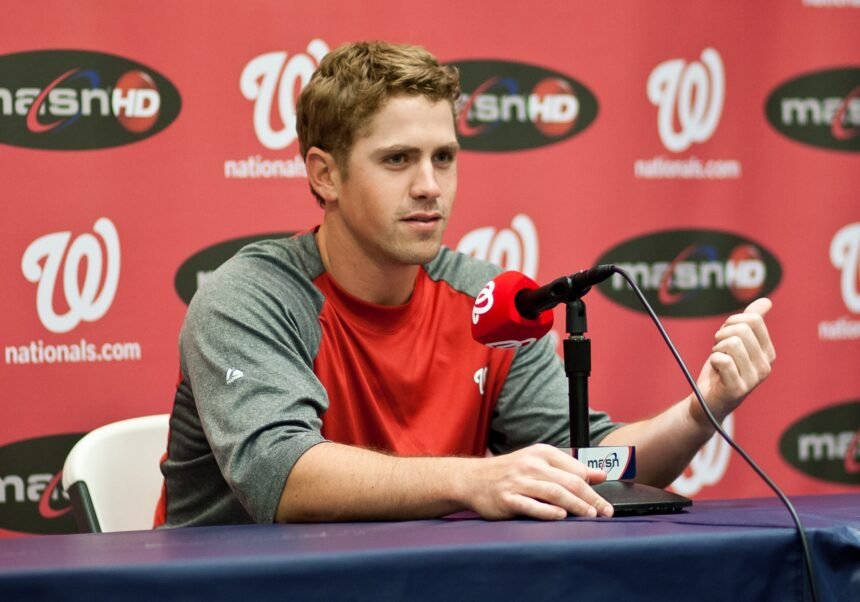
Milwaukee viewers who tuned into TMJ4’s morning news in the summer of 2025 noticed something different — Tyler Moore was gone. For a meteorologist who had publicly called the role a dream job just over a year earlier, the absence raised questions quickly.
This article covers what Moore and the station have said, what his new role at Southwest Airlines actually involves, and what the broader staffing changes at TMJ4 mean for viewers going forward.
Who Tyler Moore Is and How He Got to TMJ4
Tyler Moore is a meteorologist with nearly 20 years of television experience across multiple markets. His career included time at 5NEWS and a role as weekend meteorologist at WTSP-TV in Tampa before he made a significant move north in late 2023.
He joined TMJ4 in December 2023 as the station’s morning meteorologist. At the time, Moore described it publicly as both a dream job and a return to Wisconsin — a homecoming of sorts. He became a recognizable face on TMJ4 News Today before his final on-air day on July 2, 2025.
What Tyler Moore Said About His Decision to Leave
Moore did not leave quietly, and he did not leave without explanation. In a July 2025 Instagram post, he wrote directly: “After nearly 20 years in television, I’ve made the decision to step away from my current role. My final day on air will be Thursday, July 2.”
On Facebook, he expanded on the decision. He acknowledged that joining TMJ4 and moving back to Wisconsin was supposed to be a long chapter — but he noted that plans change. He described television as a “struggling industry” and framed his exit as a deliberate career reassessment rather than a sudden or forced move.
The tone across his posts was reflective, not bitter. There were no claims of conflict with management, no suggestion of a personal crisis. He was candid that things did not go exactly as he had imagined, while making clear the choice was his own.
No single detailed reason was ever given publicly — by Moore or by TMJ4. What viewers got was an honest, general explanation from someone who had spent two decades in the business and decided it was time to move in a different direction.
What TMJ4 Announced and Who Is Taking Over
TMJ4 handled the transition with a clear plan already in place. The station announced that meteorologist Brendan Johnson, who had been working weekend mornings, would move into the weekday morning role vacated by Moore on TMJ4 News Today.
Around the same time, meteorologist Kristen Kirchhaine also announced her departure — she cited a desire to be closer to her roots in western Michigan. The Milwaukee Journal Sentinel reported both exits in June 2025, noting the changes to the weather team.
After the two departures, TMJ4’s on-air weather team consisted of Johnson and chief meteorologist Brian Niznansky. The station communicated the changes proactively, which helped avoid the impression of disarray — even as viewers noticed multiple familiar names leaving within a short window.
One viewer comment captured the general confusion well: “What’s going on at channel 4? Three people leaving in July.” It was a fair question. But from the station’s side, the coverage plan was already mapped out before Moore’s last day aired.
His Next Role — Aviation Meteorologist at Southwest Airlines
The “where is he now?” answer came fairly quickly. Moore’s LinkedIn profile shows he began working as an Aviation Meteorologist at Southwest Airlines in August 2025 — roughly one month after leaving TMJ4.
He confirmed the move on X (formerly Twitter), writing: “Just wanted to share that since leaving TV I’ve started a new career in aviation meteorology with Southwest Airlines!” The tone was upbeat and forward-looking.
So what does an aviation meteorologist actually do? The role is meaningfully different from what viewers saw on their morning screens. Instead of presenting forecasts to a general audience, aviation meteorologists work directly with airline operations teams. They analyze weather patterns to support route planning, monitor airport conditions, and help inform safety decisions for flights.
The science is the same — atmospheric dynamics, precipitation, wind patterns — but the customer is completely different. Rather than communicating to a family deciding whether to carry an umbrella, Moore is now helping airline operations teams make decisions that affect real-time flight safety and scheduling.
The work environment also shifts considerably. Aviation meteorology in a corporate setting typically means more regular hours, an office-based role, and results measured in operational outcomes rather than audience ratings. For someone who spent nearly two decades waking before dawn to deliver live forecasts, that contrast is not a small thing.
Why Experienced TV Meteorologists Move Into Private-Sector Roles
Moore’s move is not an isolated case — it fits a recognizable pattern in the meteorology profession.
Local television news has been under real financial pressure for years. Cord-cutting has reduced broadcast audiences. Advertising revenue has shifted toward digital platforms. Stations have had to do more with smaller budgets, which often means heavier workloads for on-air staff and less job security overall. Moore used the phrase “struggling industry” himself, which is a measured but honest way to describe what many inside the business already know.
For meteorologists specifically, the appeal of moving into aviation, private weather firms, or corporate roles often comes down to a few things:
- Schedule stability — Early morning live TV means 3 a.m. alarm clocks and weekend shifts. Corporate meteorology roles generally follow more predictable hours.
- Operational impact — Aviation meteorologists can see a direct connection between their work and outcomes. The weather analysis they produce affects actual flight decisions.
- Career longevity — Private-sector roles are often less tied to ratings, audience demographics, or the kind of market-driven uncertainty that shapes TV careers.
None of this means TV meteorology is finished. There are still strong local weather operations and audiences who rely on them. But for someone with 20 years in the field, the calculus around where to invest the next chapter of a career can look very different than it did at the start.
If you follow career and industry trends in media and business, resources like Nextbiztips regularly cover how professionals are navigating these kinds of pivots across changing industries.
What This Means for TMJ4 Viewers
From a practical standpoint, viewers watching TMJ4 News Today will see Brendan Johnson handling weekday morning weather. Johnson was already part of the team, so the transition represents a schedule shift more than a complete unknown.
Brian Niznansky remains as chief meteorologist, providing continuity at the top of the weather operation. The station kept its communication straightforward — announcing the change rather than letting it go unexplained — which is the right approach when audience trust in on-air personalities is part of the product.
Personnel changes in local news are more common than viewers often realize. Meteorologists move markets, shift to private roles, or leave broadcasting altogether with some regularity. What makes this case stand out is the combination of two departures in a short span and the fact that Moore had made such a public point of calling TMJ4 a dream destination when he arrived.
But the station appears stable, the weather team remains intact, and Moore has been clear that this was his own decision — one he made from a position of reflection rather than reaction.
The Bottom Line
Tyler Moore left TMJ4 in July 2025 after about 18 months at the station and nearly 20 years in television. His departure was voluntary. He described it as a career reassessment driven partly by the pressures facing the TV industry, and he moved quickly into a new role as an aviation meteorologist at Southwest Airlines.
TMJ4 filled his slot with Brendan Johnson and communicated the change clearly to viewers. Kristen Kirchhaine also left around the same time, though for different personal reasons. Together, the departures prompted some viewer concern, but the station had a succession plan ready and operations continued without significant disruption.
For Moore, the move represents a genuine shift — from explaining the forecast to the public to using that same meteorological knowledge in an operational, corporate environment. It is the kind of career pivot that reflects both personal choice and the changing economics of local TV news. Neither dramatic nor mysterious, it is simply what a calculated career move looks like for someone who built real expertise and found a new place to apply it.
Read Also: